
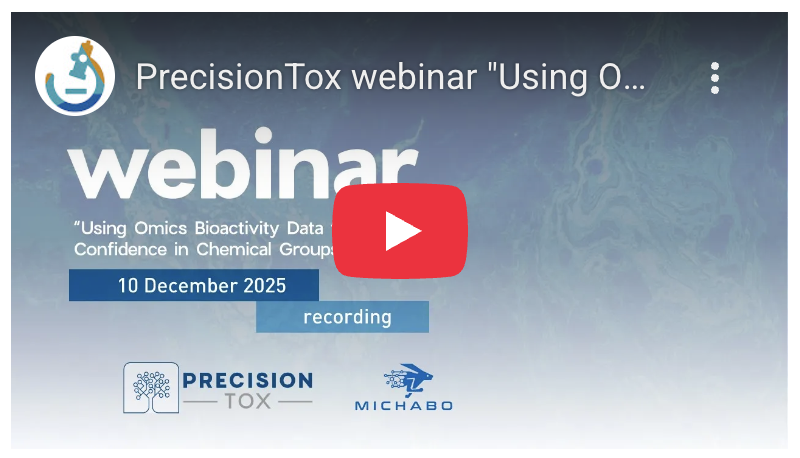
This webinar explored how 𝗼𝗺𝗶𝗰𝘀 𝗯𝗶𝗼𝗮𝗰𝘁𝗶𝘃𝗶𝘁𝘆 𝗱𝗮𝘁𝗮 𝗰𝗮𝗻 𝗯𝗲 𝘂𝘀𝗲𝗱 𝘁𝗼 𝗶𝗻𝗰𝗿𝗲𝗮𝘀𝗲 𝗰𝗼𝗻𝗳𝗶𝗱𝗲𝗻𝗰𝗲 𝗶𝗻 𝗰𝗵𝗲𝗺𝗶𝗰𝗮𝗹 𝗴𝗿𝗼𝘂𝗽𝗶𝗻𝗴. It included both 𝗿𝗲𝗴𝘂𝗹𝗮𝘁𝗼𝗿𝘆 𝗮𝗻𝗱 𝗶𝗻𝗱𝘂𝘀𝘁𝗿𝘆 𝗽𝗲𝗿𝘀𝗽𝗲𝗰𝘁𝗶𝘃𝗲𝘀, highlighting the importance of grouping to support read-across and to enable a reduction in animal testing.
The session featured 𝘀𝗲𝘃𝗲𝗿𝗮𝗹 𝗰𝗮𝘀𝗲 𝘀𝘁𝘂𝗱𝗶𝗲𝘀 𝗱𝗲𝗺𝗼𝗻𝘀𝘁𝗿𝗮𝘁𝗶𝗻𝗴 𝘁𝗵𝗲 𝗮𝗽𝗽𝗹𝗶𝗰𝗮𝘁𝗶𝗼𝗻 𝗼𝗳 𝗺𝗲𝘁𝗮𝗯𝗼𝗹𝗼𝗺𝗶𝗰𝘀 and transcriptomics data in chemical grouping, and 𝗶𝗻𝘁𝗿𝗼𝗱𝘂𝗰𝗲𝗱 𝘀𝗼𝗺𝗲 𝗴𝘂𝗶𝗱𝗮𝗻𝗰𝗲 𝗱𝗲𝘃𝗲𝗹𝗼𝗽𝗲𝗱 𝗯𝘆 𝘁𝗵𝗲 𝗢𝗘𝗖𝗗 𝘁𝗼 𝗿𝗲𝗽𝗼𝗿𝘁 𝗼𝗺𝗶𝗰𝘀 𝘀𝘁𝘂𝗱𝗶𝗲𝘀.
Finally, a case study was presented that expands beyond the primary use of metabolomics, here being used to discover chemical biotransformation products which can then be used to support chemical grouping based on metabolic similarity.
Thank you to everyone who contributed to this webinar Mark Viant, Thomas Lawson, Tomasz Sobański, Francesca Trivelloni, Anthony Reardon
PrecisionTox
GRANT AGREEMENT: 965406

The content of this website reflects the authors’ views and the European Union cannot be held responsible for any use that may be made of the information contained therein
© 2026 PrecisionTox.